


ClawParty - Real Claw Machine!
Xtrend sdn bhd
ClawParty - Real Claw Machine! is an arcade game built around the familiar idea of controlling a claw and trying to grab prizes. I approached it as the sort of game I might open during a short break rather than as a long, story-driven experience. That distinction matters: its appeal depends less on deep progression and more on whether the basic grabbing action feels satisfying enough to repeat.
The game is free to install, and its age rating is Everyone, so it is easy to consider for casual play at home or on a shared device. Xtrend sdn bhd is the developer, and the game sits in the arcade category. Its store summary, “Play Anytime, Anywhere!”, captures the intended convenience, but it does not answer the more useful question: is this particular claw-machine experience worth keeping installed when there are many other quick arcade games competing for attention?
What I would judge before keeping it installed
My first decision criterion is the feel of the central action. A claw game lives or dies by timing, positioning, and the small moment of tension between pressing the control and seeing whether the grab works. If that interaction feels predictable or satisfying, even a simple game can become a pleasant habit. If it feels loose, repetitive, or overly dependent on spending, the novelty disappears quickly.
The second criterion is how well the game fits short sessions. I would not choose a claw-machine game expecting a large adventure, a complex arcade campaign, or the variety of a broad mini-game collection. I would choose it when I want something immediately understandable, with little reading and no need to remember a complicated control scheme. That makes it suitable for a few spare minutes, especially when I want a game that can be picked up without preparation.
The third criterion is patience. Virtual claw machines can be more frustrating than other arcade formats because failure is part of the fantasy. Missing a target by a small margin can be entertaining when the attempt feels fair, but it becomes irritating when the result seems arbitrary. I pay attention to whether each attempt teaches me something about placement and timing, or whether I am simply repeating the same action and hoping for a different outcome.
Related News






It is also worth looking at the audience around the game. ClawParty is marked for Everyone, which makes the concept approachable for younger players as well as adults who enjoy toy-grabber machines. Still, an age rating does not tell me whether the spending model will suit every household. The game includes optional purchases ranging from ten cents to six hundred dollars per item, so I would be especially careful before handing the device to a child. I would review purchase controls on the device first and avoid treating the free download as a guarantee of a completely cost-free experience.
The current version is 1.0.7, and the minimum operating-system requirement is Android 7.0. That gives the game a reasonably broad starting point for Android users with older supported phones, although the actual comfort of play will still depend on the device and how smoothly the controls respond. For a game based on small movements, a responsive screen matters more than impressive graphics ever could.
The first-session test I recommend
When I try a game like this, I do not judge it after one successful grab. I play several short attempts and ask three practical questions. Can I understand what to do without searching for instructions? Does changing my position or timing produce a noticeable difference? And do I feel curious about trying again after a miss, rather than merely annoyed?
Gallery
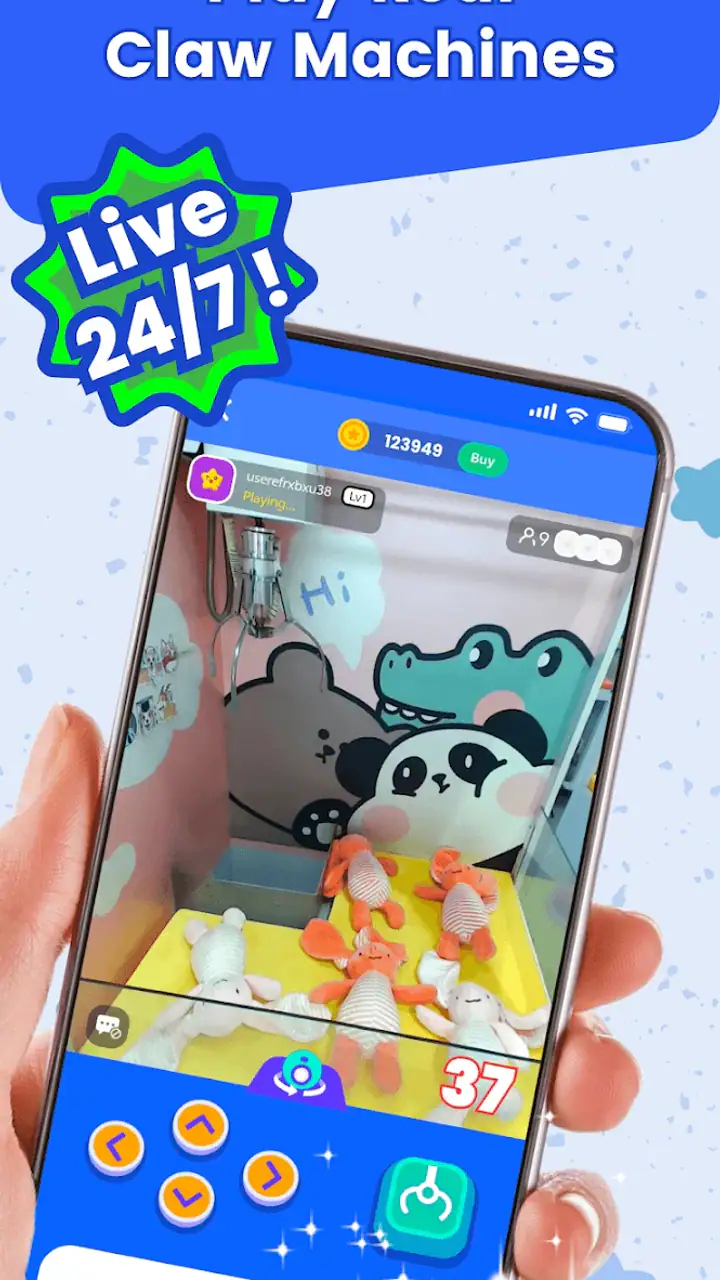
That test is more revealing than the store summary. “ClawParty” is a very short description, while the real decision is whether the interaction has enough feedback to support repeated play. A good first session should leave me with a clearer sense of control. I should be able to identify why an attempt failed and adjust my next move. If I cannot, I would probably prefer a different arcade game with more immediate and readable feedback.
Where ClawParty makes the strongest case
The biggest strength is its instantly recognizable premise. I do not need to learn a character roster, memorize a map, or understand a complicated ruleset before starting. The claw-machine format supplies its own goal: line up a grab and see what happens. That makes the game approachable for someone who normally avoids mobile games because they feel overloaded with menus and systems.
I can also see it working well as a shared, informal game. Imagine waiting for a takeaway order with a friend, passing a phone between attempts and commenting on whether the claw was close enough. The appeal in that situation is not a lengthy achievement path. It is the quick suspense of one attempt, followed by the decision to let someone else try. A conventional puzzle game may be better for focused solo play, but this kind of arcade interaction can be easier to explain to another person in a few seconds.
Another useful quality is the low commitment of the format. Because each attempt is self-contained, I do not need to protect a long run or remember where I stopped. That makes it a better fit than a platform game for moments when I may be interrupted. If a message arrives or I need to put the phone down, I am not abandoning a carefully built strategy or losing the thread of a story.
The most important practical strength is immediate accessibility, not depth. I would recommend it to someone who wants a simple arcade distraction and enjoys the physical-machine fantasy behind claw games. The game does not need to compete with a full console-style title to be useful; it only needs to make short attempts feel engaging enough to repeat.
How to get more from each attempt
My first tip is to treat every miss as a positioning lesson rather than rushing straight into another attempt. Before pressing, I would look at the target’s apparent center and consider whether the claw needs to approach from a particular side. Even when the game is simple, pausing for a moment can make the action feel more deliberate than tapping quickly.
My second tip is to separate entertainment from reward chasing. If I start thinking only about obtaining the next prize or unlocking whatever comes after it, the game can become a cycle of frustration. I get more value when I treat the attempt itself as the activity. This is particularly important in a free game with optional purchases, because the wish to recover from a disappointing miss can make spending feel like part of the solution.
My third tip is to use it as a short-session game rather than forcing a long play period. I would open it for a handful of attempts, then stop while the interaction still feels fresh. That approach helps reveal whether the core mechanic genuinely has replay value. If I need a long session to feel entertained, this probably is not the right arcade choice for me.
A fourth consideration is device handling. Since claw control depends on accurate touches, I would play with the phone held steadily and avoid attempting it while walking or riding in a moving vehicle. That is not a special feature of the game, but it changes the quality of the experience: a small accidental movement can make a precision-based attempt feel unfair when the real problem was an unstable grip.
What the reception suggests about expectations
The game has an average rating of 2.7 from around four hundred and fifty ratings, with just over one hundred written reviews. I would not treat that score as a final verdict, but I would take it as a reason to keep expectations measured. The concept may attract people who like the idea of a virtual claw machine, yet an appealing premise does not automatically guarantee that the controls, pacing, or repeat play will satisfy everyone.
For me, that reception changes how I would install it. I would try it because the premise is easy to understand and the download is free, but I would not assume that it will become a permanent favorite. I would give the first session a fair test, watch how the interaction feels, and uninstall it without hesitation if the attempts stop feeling responsive or enjoyable.
Where another arcade option may fit better
If I want fast reactions and a clear sense of improvement, a traditional timing or endless-runner arcade game may suit me better. Those formats usually make progress easier to read: I can react faster, survive longer, or improve a score through practice. A claw machine offers a different kind of tension, but it may feel slower and less skill-transparent to someone who prefers constant action.
If I want strategic variety, a puzzle arcade game is likely a stronger alternative. Puzzle games often give me several ways to approach a challenge, while the claw-machine idea naturally focuses attention on the same basic type of attempt. That narrow focus is part of ClawParty’s charm, but it is also the main reason I would not recommend it as a general replacement for every kind of mobile entertainment.
If I want a social game for several people, a party collection may offer more variety between turns. ClawParty can work as a quick pass-and-play distraction, but I would choose a broader option for a planned group session where people expect changing rules and different challenges. The claw format is best when its simplicity is an advantage, not when the group is looking for a large menu of activities.
There is also a difference between wanting a virtual arcade fantasy and wanting a realistic simulation of a physical claw machine. I would choose ClawParty for convenience and quick access, not because a phone can reproduce every detail of standing in front of a real machine. Someone who enjoys the atmosphere, physical controls, and uncertainty of an actual arcade may find a mobile version less compelling even if the basic idea is familiar.
The cost of switching from free play to purchases
Because the game is free to install, the initial commitment is small. The more important commitment is attention: whether I enjoy the core loop enough to keep returning. Optional purchases are listed from ten cents to six hundred dollars per item, which is a very wide range. I would therefore decide in advance whether I am willing to spend anything, rather than making that decision immediately after a failed attempt.
A sensible workflow is to play without buying first, establish whether the controls are enjoyable, and only then consider whether an optional purchase adds meaningful convenience or simply extends a loop that I already find repetitive. I would also check the device’s purchase protections before allowing a child to play. The Everyone rating makes the game broadly approachable, but it does not remove the need for adult supervision around spending.
Switching away is easy in practical terms if the game is not a good match: I can return to a puzzle, runner, or other arcade title that better fits my preferred pace. The harder cost is psychological. After investing time or money, I may feel tempted to continue just to justify that investment. My advice is to judge the next session on its own enjoyment, not on what has already been spent.
Who should try it, and who should skip it
I would suggest trying it if you enjoy claw machines, want a very approachable arcade game, or need something that can fill small gaps in the day. It is also a reasonable choice for introducing a casual player to mobile gaming because the central idea is familiar and does not require a long explanation. The free entry makes that trial relatively straightforward.
I would skip it if I need a deep progression system, a substantial story, competitive depth, or a wide selection of mechanics. I would also be cautious if I dislike repeated attempts with uncertain outcomes. Players who become frustrated by misses or who prefer clearly measurable skill growth may have a better time with a precision arcade game, a puzzle title, or a runner.
Parents and guardians should make a separate judgment about spending. Although the age rating is Everyone, the presence of high-priced individual purchases means I would not leave purchasing entirely to chance. I would set restrictions before sharing the device and explain that the game can be enjoyed without treating every unsuccessful grab as a reason to buy another opportunity.
My recommendation after weighing the trade-offs
ClawParty - Real Claw Machine! is worth a cautious trial for the right player, but I would not recommend it as a universal arcade pick. Its best quality is the clarity of its idea: open it, line up a grab, and enjoy a brief burst of suspense. That simplicity makes it convenient and friendly to newcomers, especially during short breaks or casual shared play.
My reservation is equally clear. A claw-machine game has a narrow foundation, and the experience needs responsive controls and fair-feeling attempts to stay interesting. The modest average rating of 2.7 means I would approach it with realistic expectations rather than assuming the premise alone guarantees a polished long-term experience. I would test the basic loop before considering any purchase.
In the end, I would keep it installed only if the first few sessions made me want to improve my positioning and try again for fun. If I found myself repeating attempts out of frustration, or looking for a more varied challenge, I would switch to another arcade category without feeling that I was missing the point. For a free, Everyone-rated diversion from Xtrend sdn bhd, it is easy to sample; whether it deserves regular play depends on how much satisfaction I personally get from the claw-machine loop.
FAQs for ClawParty - Real Claw Machine!
What is ClawParty - Real Claw Machine!?
ClawParty - Real Claw Machine! is a mobile arcade game that recreates the experience of playing a claw machine on your phone or tablet. You control the claw, try to position it over a prize, and release it at the right moment. The game is designed for quick sessions and casual entertainment, with colorful prizes, simple controls, and a playful arcade atmosphere.
How do you play ClawParty - Real Claw Machine!?
Gameplay is straightforward and suitable for most ages. Players generally move the claw horizontally or position it over a selected prize before tapping the control to lower it. Success depends on timing, alignment, and sometimes the strength or movement pattern of the claw. It may take several attempts to understand how prizes are arranged, so patience is important when starting.
Is ClawParty - Real Claw Machine! free to download and play?
ClawParty - Real Claw Machine! can typically be downloaded without an upfront purchase, allowing users to try the main gameplay for free. However, free mobile games may include advertisements, optional purchases, or systems that provide extra attempts, coins, tickets, or other bonuses. Before spending money, check the current store listing and in-game purchase details.
Does ClawParty - Real Claw Machine! require an internet connection?
The connection requirements can depend on the version installed and the features you use. Basic claw-machine gameplay may be available in some situations without a constant connection, while advertisements, rewards, events, account features, or online functions may require internet access. If you plan to play while traveling, test the app offline first and review its permissions and store information.
Is ClawParty - Real Claw Machine! suitable for children?
The colorful presentation and simple controls make ClawParty - Real Claw Machine! appealing to children and casual players. Nevertheless, parents should review the age rating, advertising policy, privacy information, and optional in-app purchases before allowing independent play. If the game uses virtual currency or rewards, enabling device-level purchase restrictions can help prevent accidental spending.
Pros
- Fun claw-machine gameplay with quick
- easy-to-learn controls.
- Bright arcade-style graphics make the app appealing to casual players.
- Short rounds are convenient for quick breaks or on-the-go play.
- Offers a playful collection-focused experience for fans of prize machines.
- Simple interface makes it accessible for younger and casual users.
Cons
- Winning prizes can depend heavily on timing and luck.
- Repeated attempts may become repetitive without enough variety.
- Frequent ads or promotional prompts may interrupt the experience.
- Virtual rewards may not provide real-world value or delivery options.
- Gameplay may require a stable internet connection for some features.


